The big beasts
Ice Age giants
The animals of the last ice age were not monsters. They were elephants, deer, cats and sloths, only larger, hairier or longer in the tooth. The last woolly mammoths died out only about 4,000 years ago.
The woolly mammoth was an elephant
The woolly mammoth is an ice age icon, but the Natural History Museum in London points out that it was only the last chapter in a six-million-year-long story. [NHM London] Mammoths did not just look like elephants: they were elephants. Mammoths and modern elephants belong to the same family, Elephantidae, which arose in Africa about seven million years ago and quickly split into three branches: one led to African elephants, one to Asian elephants, and the third became the mammoths. [NHM London] So mammoths are cousins of today’s elephants, not their ancestors, and the Asian elephant is their closest living relative. [NHM London]
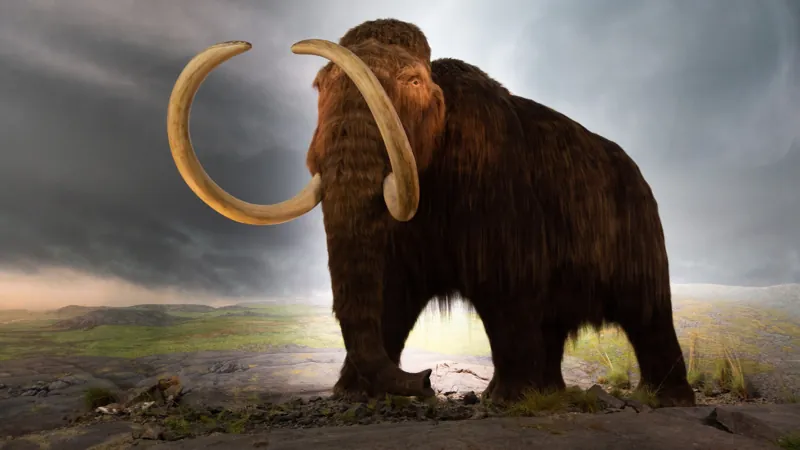
The museum’s mammoth expert, Professor Adrian Lister, lists the differences. A woolly mammoth was very high at the shoulder and sloped down towards the tail. Its tusks did not just curve: they spiralled, curving in two dimensions. [NHM London] It had very small ears and a shorter tail than living elephants, and scientists now think its hair was a deeper chocolate brown than many reconstructions show. [NHM London]
The snowy picture is wrong too. Woolly mammoths are often shown in desolate, snowy places, but in reality they lived in richly vegetated landscapes, mostly away from deep snow. [NHM London] Their world was the mammoth steppe, a cold, dry grassland that once stretched across Eurasia. [NHM London]
Mammoths in America, and on islands
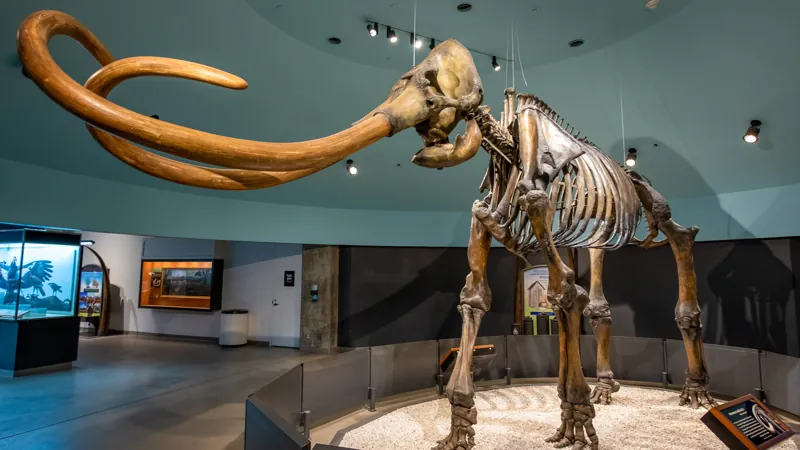
Steppe mammoths crossed into North America about 1.5 million years ago. [NHM London] Their descendants there, the Columbian mammoths, lived from southern Canada down to Costa Rica. [NHM London] Woolly mammoths roamed parts of the northern hemisphere for at least half a million years. They were still in their heyday 20,000 years ago, but within 10,000 years they were reduced to isolated populations off the coasts of Siberia and Alaska, and by 4,000 years ago they were gone. [NHM London]
The giant deer, or “Irish elk”
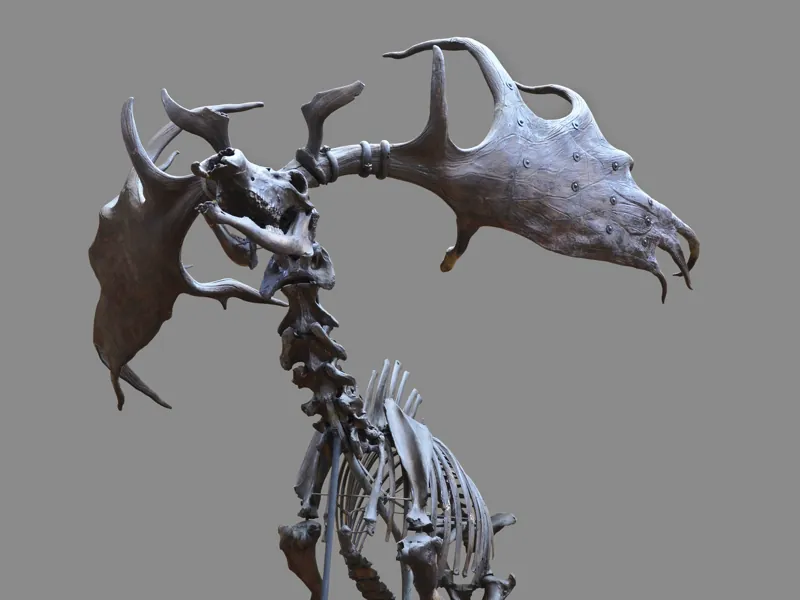
Megaloceros giganteus is often called the Irish elk. The museum calls it the giant deer, and it lived throughout Europe, roaming parkland and grassland. [NHM London] It stood two metres tall at the shoulder, about the height of a doorframe, and the males carried antlers up to three and a half metres across. [NHM London] Males shed their antlers each spring and grew a new pair over the summer, ready for the mating season in autumn. [NHM London]
More than 20,000 years ago, people were drawing giant deer on cave walls in what is now southern France. [NHM London] The earliest fossil record of the species is from 400,000 years ago and the last is from 8,000 years ago. [NHM London] Its first wave of extinction came about 12,000 years ago, when it disappeared from Ireland, Britain and most of Europe when the climate at the end of the Ice Age became very cold and severe and food would have been very scarce; the final population vanished from central Russia around 8,000 years ago. [NHM London] One very complete skeleton stands in the Manx Museum: see Ice Age Britain and the Isle of Man.
The sabre-toothed cat
California made the sabre-toothed cat, Smilodon californicus, its state fossil in 1973. [California State Capitol Museum] These cats lived in California in the Late Pleistocene and went extinct about 10,000 years ago, and the species is the second most common mammal fossil found in the Rancho La Brea tar pits in Los Angeles. [California State Capitol Museum] The state museum’s page says the cat would wait for prey to come near, then use its giant teeth to catch it. [California State Capitol Museum]
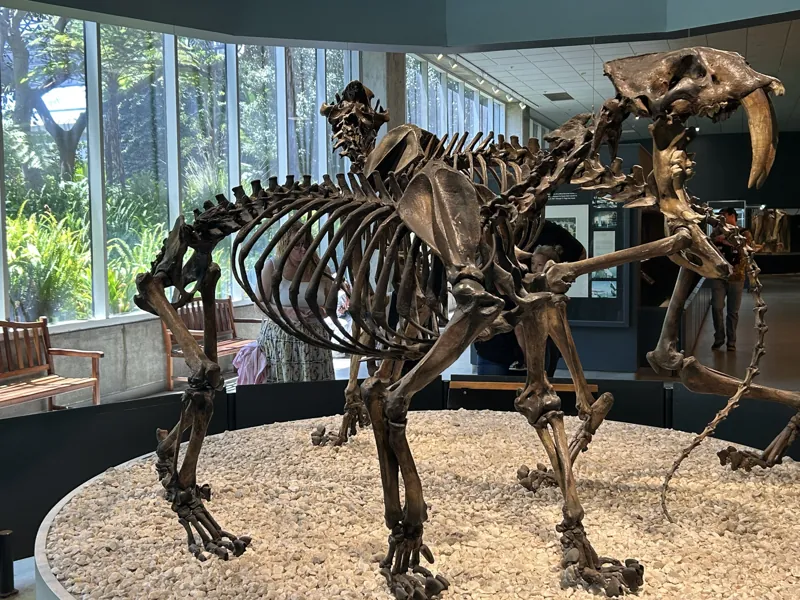
The skeleton above is labelled Smilodon fatalis on its file page, in the La Brea Tar Pits museum. The California state symbol page uses the name Smilodon californicus; we give each name as its source does.
The ground sloth that met people
At White Sands in New Mexico, plant eaters such as ancient camels, Columbian mammoths and Harlan’s ground sloth came to the ancient Lake Otero to feed on the grasses and trees of the Tularosa Basin. [NPS] In 2006, scientists noticed dark spots on the lake bed that looked like footprints. They led to the discovery of both Harlan’s ground sloth tracks and human footprints. [NPS] That story is on our people page.
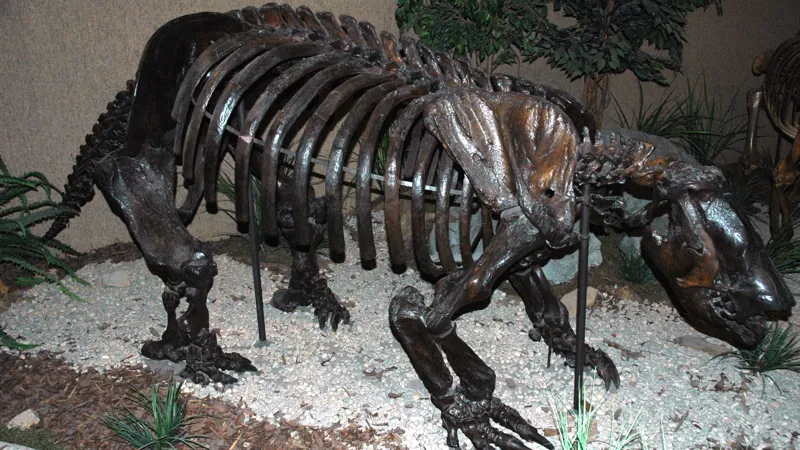
Names, not guesses: the photographs are captioned from their file pages: a model mammoth in Victoria, real skeletons in Paris, Los Angeles and Pittsburgh. Sizes and dates on this page are the museums’ own.
Enjoyed a desk of official ice-age wording, unblended, and the marks glaciers still leave?
No pop-ups. No intrusive advertising. Just interesting stuff. A little support helps the next climates.im site get built.