Frozen air
Reading the ice
Drill down into an ice sheet and you travel back in time, collecting samples of old air on the way. Here is what the deepest ice has told us.
Time in a tube
The British Antarctic Survey explains that most ice core records come from Antarctica and Greenland, and the longest cores reach 3 kilometres deep. [BAS] The oldest continuous records reach back 123,000 years in Greenland and 800,000 years in Antarctica. [BAS] Ice cores hold information about past temperature and many other parts of the environment. [BAS]
The best part is the air. The ice holds small bubbles, each a sample of the atmosphere, and from these scientists can measure the past amounts of gases, including carbon dioxide and methane, directly. [BAS] At Law Dome in Antarctica, where so much snow falls, air from as recently as the 1980s is already sealed in bubbles in the ice. [BAS] Direct measurements of carbon dioxide in the air only go back to the 1950s, so the ice fills the gap. [BAS]
The 800,000-year record
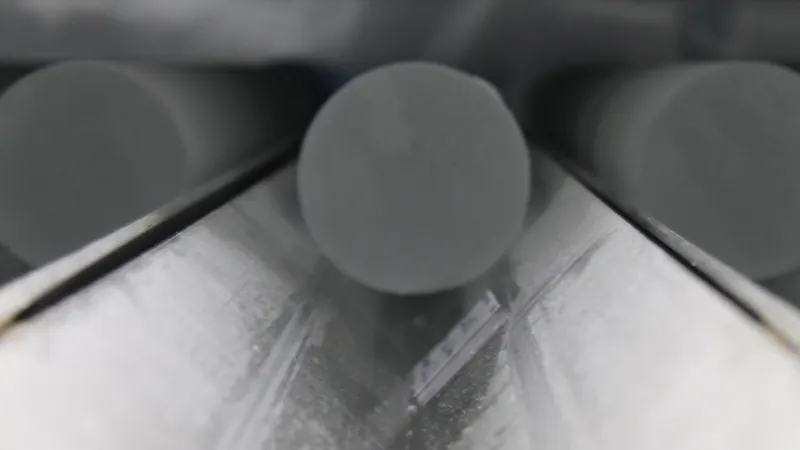
The oldest ice core so far comes from the European Project for Ice Coring in Antarctica, EPICA, at Dome C on the Antarctic plateau. [BAS] It reaches back 800,000 years and shows a run of long, cold glacial periods, broken roughly every 100,000 years by warm interglacials, of which the last 11,000 years is the most recent. [BAS] By measuring the ratios of different forms of water in the ice, scientists work out past temperatures in Antarctica and Greenland. [BAS] Methane follows the glacial rhythm too, probably because there were fewer wetlands in the colder, drier glacial periods. [BAS]
The gases also give a warning. Antarctic cores show carbon dioxide was stable for the last thousand years until the early 19th century. [BAS] The briefing reports carbon dioxide now nearly 40 percent above its pre-industrial level, and methane more than double. [BAS] The fastest large natural rise found in older cores is about 20 parts per million in 1,000 years, as Earth came out of the last ice age about 12,000 years ago; the briefing says carbon dioxide rose by the same 20 parts per million in its last ten years. [BAS]
Ten degrees in forty years
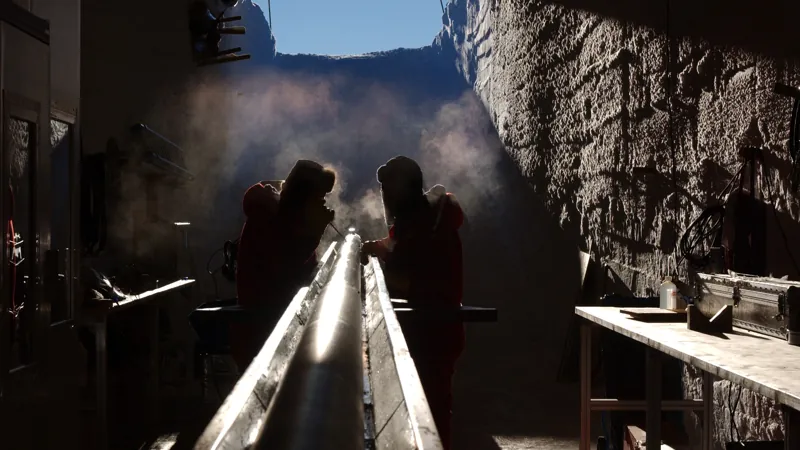
Most ice age changes were huge but fairly gradual. Ice cores also show that sudden jumps are possible. During the last glacial period, Greenland went through a series of very fast warmings, in which the temperature rose by more than 10°C within 40 years. [BAS] Antarctica and the Southern Ocean saw a different pattern, which fits the idea that the jumps came from sudden changes in how the ocean carried heat. [BAS]
Going older: 1.2 million years
In January 2025, the Beyond EPICA project reported drilling ice more than 1.2 million years old at Little Dome C, a remote site on the central Antarctic plateau. [BAS] Scientists from twelve institutions in ten European countries took part, over more than two hundred days of drilling and processing across four field seasons. [BAS] The site is about 3,200 metres above sea level, with an average summer temperature of −35°C. [BAS]
The chief field scientist, Julien Westhoff, said there was a strong indication that the top 2,480 metres hold a climate record going back 1.2 million years, with up to 13,000 years squeezed into a single metre of ice. [BAS] The oldest ice is in the lowest 210 metres, just above the bedrock, and the 2,800-metre core is being shipped to Europe in special cold containers. [BAS]
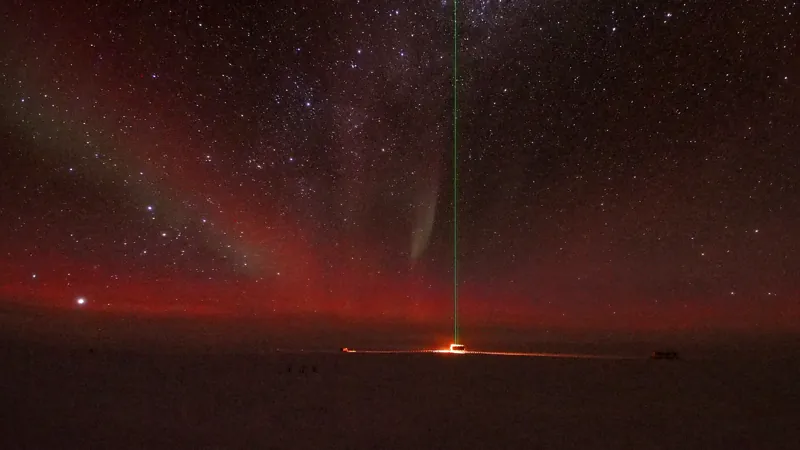
Keep the numbers apart: 800,000 years is the EPICA Dome C record in the BAS briefing. 1.2 million years is the 2025 Beyond EPICA announcement, and the team called the deepest ice’s age a strong indication, pending laboratory work.
Enjoyed a desk of official ice-age wording, unblended, and the marks glaciers still leave?
No pop-ups. No intrusive advertising. Just interesting stuff. A little support helps the next climates.im site get built.